Let’s Connect!
Portal Login
Home / Blown-In Attic Insulation Services in Peoria, AZ
Blown-in insulation is a loose-fill material distributed across an attic floor to slow heat movement between the attic and the rooms below. For homeowners in Peoria, Arizona, improving attic insulation may help address uneven indoor temperatures, rooms that become uncomfortable in the afternoon, and an air conditioner that seems to run longer than expected.
Green Faith Solutions is headquartered in Glendale and serves homeowners throughout Peoria and other communities in the Phoenix metropolitan area. Our primary focus is residential blown-in attic insulation using fiberglass or cellulose materials selected according to the home’s existing conditions and insulation needs.
Attic insulation is not a replacement for a working air-conditioning system. It supports that system by reducing the amount of outside heat moving through the ceiling. When the attic has low, compressed, or uneven insulation, even a recently installed AC unit may have to work harder to keep the home comfortable.
Homes near Peoria face a long cooling season. According to the National Weather Service, Phoenix averages about 94 days each year with temperatures of 100°F or higher, reflecting the intense heat experienced throughout the West Valley.
As the roof heats up, attic heat moves toward the cooler rooms below. Thin, compressed, or uneven insulation allows more heat to pass through the ceiling, increasing the cooling demand placed on the air conditioner.
Attic insulation does not cool a vented attic. It slows heat transfer, helping indoor rooms maintain steadier temperatures for longer periods.
We’ve made the smart energy upgrade easier to say yes to. Combine low monthly financing with available utility rebates — most homeowners pay less per month in financing than they save on their electric bill.
Major utilities — FPL in Florida and SRP/APS in Arizona — offer energy-efficiency rebates and incentive programs for qualifying homeowners. We help you identify which programs you qualify for and assist with the paperwork — at no extra charge.
Fast home-improvement financing
Soft credit checks, transparent terms
Flexible monthly payment plans
Energy-efficiency specialists
Multi-lender comparison
Approval in minutes. Soft credit checks available. Multiple programs to fit every credit profile.
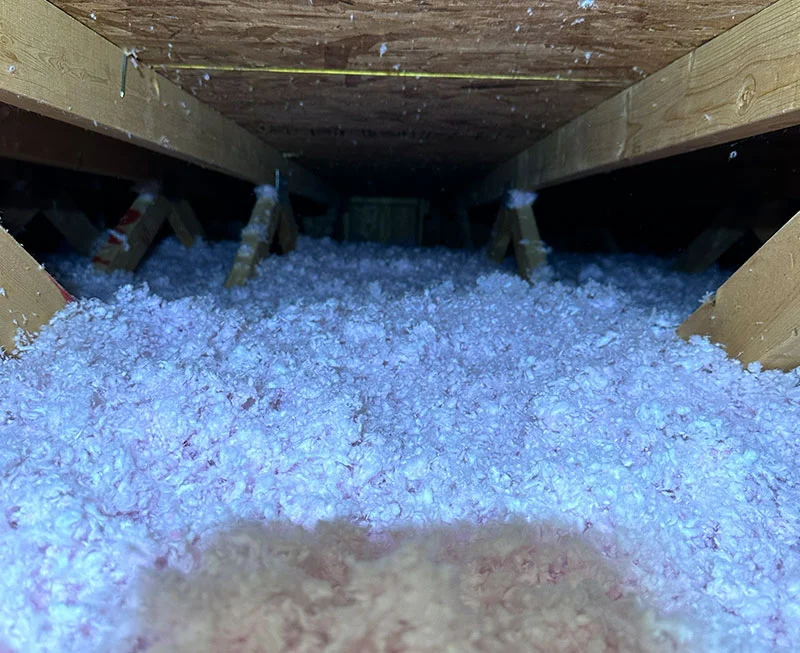
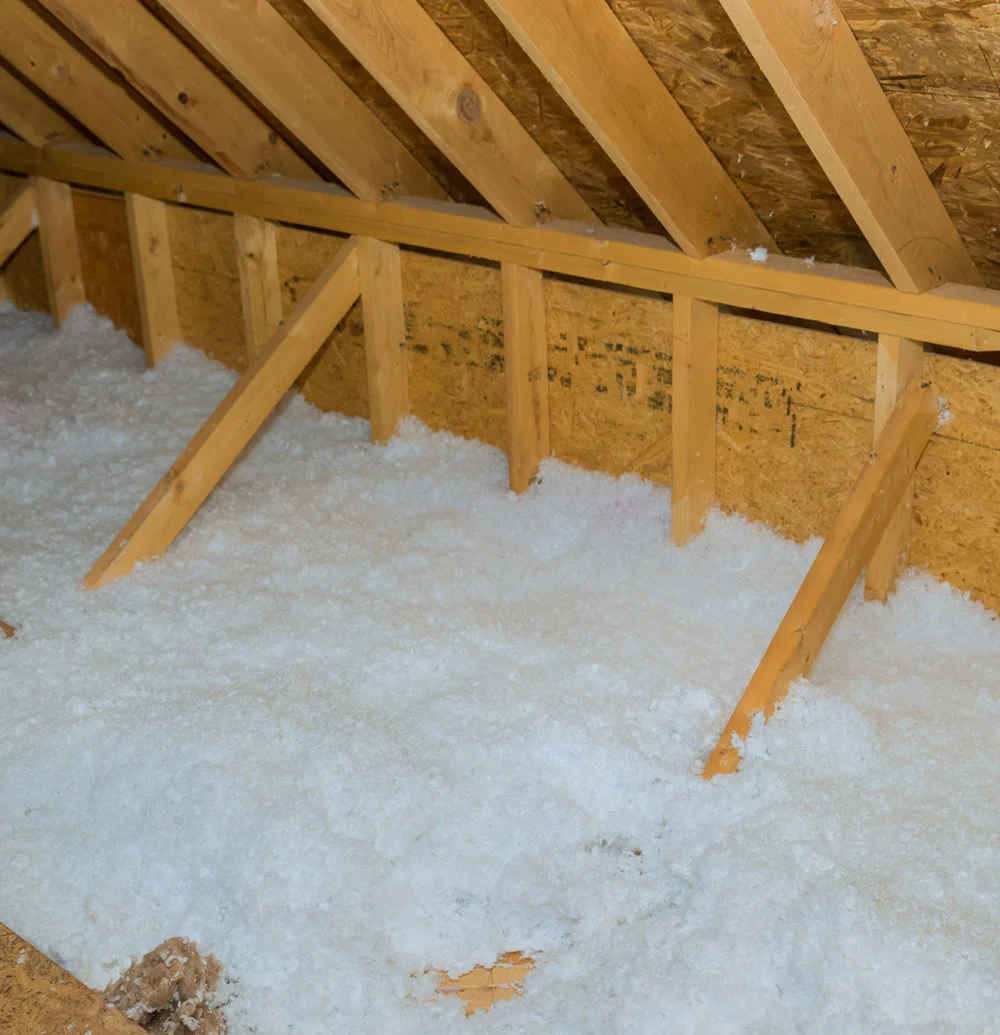
Blown-in attic insulation consists of loose fiberglass or cellulose fibers installed through a hose. The material settles around framing, wiring, pipes, and irregular attic spaces, helping create more consistent coverage.
Its performance is measured by R-value, which represents resistance to heat flow. The material, depth, density, and quality of coverage all affect how well the insulation performs. Deep insulation in one area cannot fully compensate for bare or shallow sections elsewhere.
A new air conditioner can improve cooling performance, but it cannot correct every source of heat entering the home. When attic insulation is inadequate, the new system may still work against heat passing through the ceiling.
Long AC cycles do not necessarily mean the equipment is defective. Insulation gaps, duct conditions, windows, air leakage, thermostat placement, and room airflow may also contribute.
An attic evaluation can help determine whether blown-in insulation may reduce part of the home’s cooling demand.
Homeowners often notice comfort problems before seeing an issue in the attic. Possible signs include:
These signs do not automatically mean more insulation is required, but they may indicate that the attic should be evaluated.
Fiberglass and cellulose are commonly used for residential blown-in insulation.
Blown-in fiberglass is made from fine glass fibers and is lightweight. Cellulose is generally made from treated recycled paper fibers and has a denser composition.
Both materials can provide effective thermal resistance when installed correctly. The appropriate choice depends on the existing insulation, attic layout, desired R-value, ventilation, and installation plan.
Consistent coverage matters more than the material name alone. Homeowners should ask how insulation depth will be measured and how shallow or difficult-to-reach areas will be handled.
There is no single insulation depth that applies to every Peoria-area attic. Different materials provide different R-values per inch, and homes begin with different amounts of existing insulation.
An installer should measure several areas rather than looking only through the attic hatch. Insulation may appear deep near the opening while remaining shallow near exterior walls, bedrooms, additions, or other difficult areas.
When existing insulation is dry and suitable to keep, new blown-in material may be added over it to reach the planned R-value and improve overall coverage.
No. Existing attic insulation can often remain when it is dry, reasonably clean, and suitable to cover.
Removal may be needed when the material is wet, contaminated, heavily damaged, affected by pests, or hiding a condition that requires repair. A roof or moisture problem should be corrected before new insulation is installed.
The decision should be based on the insulation’s current condition rather than its age alone. Homeowners can request photos and an explanation when removal is recommended.
A residential blown-in insulation project begins with an attic evaluation. The installer identifies the existing material, measures its depth, estimates the attic square footage, and documents thin or exposed sections.
Ventilation openings, ducts, wiring, fixtures, and attic access points should be considered before installation. Once the attic is prepared, fiberglass or cellulose is distributed across the attic floor to the planned depth and R-value.
The crew should monitor coverage throughout the project, protect the pathway through the home, contain loose material, and clean the work area afterward.
Photos, depth markers, and material documentation can help homeowners verify that the completed installation matches the agreed scope.
The cost to get insulation blown in near Peoria depends on the home and the condition of its attic. Important factors include:
A larger attic generally requires more material, while difficult access or uneven coverage may increase the time needed to complete the work.
Homeowners should compare the entire project scope rather than focusing only on the total price. A clear estimate should identify the material, attic area, planned R-value, preparation, cleanup, and method used to verify coverage.
Blown-in attic insulation can reduce unnecessary heat transfer, but no contractor can guarantee the same savings for every household.
ENERGY STAR estimates that homeowners may save an average of 15% on heating and cooling costs by air sealing their homes and adding insulation in attics and other accessible areas. Actual results depend on thermostat settings, AC efficiency, duct condition, windows, air leakage, home size, occupancy, and weather.
For many homeowners, the first noticeable change is improved comfort. Rooms may hold their temperature longer, hot spots may become less noticeable, and the AC may not need to respond as aggressively to attic heat.
A reliable insulation contractor should explain what was observed in the attic and why additional insulation may be recommended. The proposal should clearly define:
Homeowners should also ask how ducts, wiring, fixtures, and difficult attic areas will be protected. Clear photos and measurements make it easier to compare local insulation contractors and confirm that the proposed work addresses the home’s actual conditions.
When a Peoria home remains hot, develops uneven rooms, or places a heavy workload on the air conditioner, the attic may be part of the problem. Green Faith Solutions serves Peoria homeowners from our Glendale headquarters with residential blown-in insulation evaluations and installations. Contact our team to discuss what you are noticing in your home and arrange an evaluation based on the actual depth, condition, and coverage of your attic insulation.
It can help the living area remain more comfortable by slowing heat movement through the ceiling. It does not create cold air, so the home still needs a properly functioning cooling system.
No. A traditional vented attic will still become hot during Peoria summers. The insulation is installed along the attic floor to reduce how quickly that heat moves into the conditioned rooms below.
It may help when insufficient attic insulation is adding to the home’s cooling load. AC condition, equipment sizing, ductwork, air leakage, and thermostat settings should also be evaluated.
A new AC does not automatically eliminate the need for adequate insulation. If the house still heats quickly or rooms remain uneven, an attic evaluation may reveal low or disturbed coverage.
In many cases, loose-fill material can be added over existing batts when they are dry and in acceptable condition. ENERGY STAR notes that new insulation does not always need to match the existing type.
Blown-in insulation can remain useful for many years when it stays dry and undisturbed. Its condition should be rechecked after roof leaks, pest activity, remodeling, or repeated work inside the attic.
Material may settle, shift, or be moved during repairs. Some attics were also installed unevenly from the beginning, leaving shallow areas near eaves, additions, or hard-to-reach spaces.
Not necessarily. The goal is to reach an appropriate R-value with even coverage while preserving ventilation and required clearances. Adding material without evaluating the attic can hide problems or provide limited additional benefit.
Ask each contractor to define the material, target R-value, square footage, preparation, ventilation protection, cleanup, and documentation included in the estimate. Clear scopes are easier to compare than vague totals.
Depth measurements, visible joists, bare areas, uneven coverage, and ongoing comfort concerns can provide clues. A full evaluation should inspect several parts of the attic rather than only the area beside the access opening.