Blown-In Attic Insulation Service

Licensed • Bonded • Insured

This field is for validation purposes and should be left unchanged.

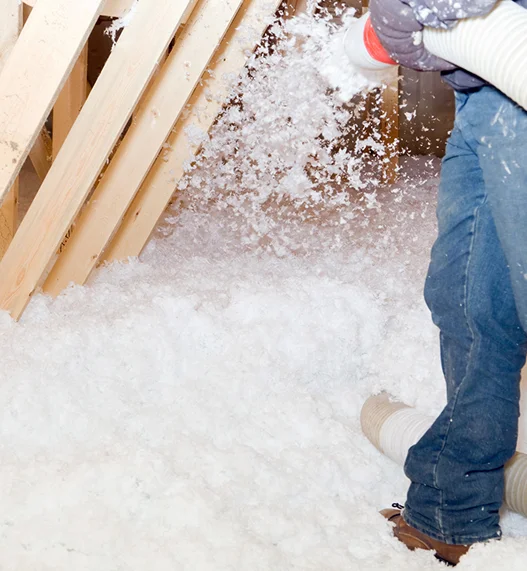
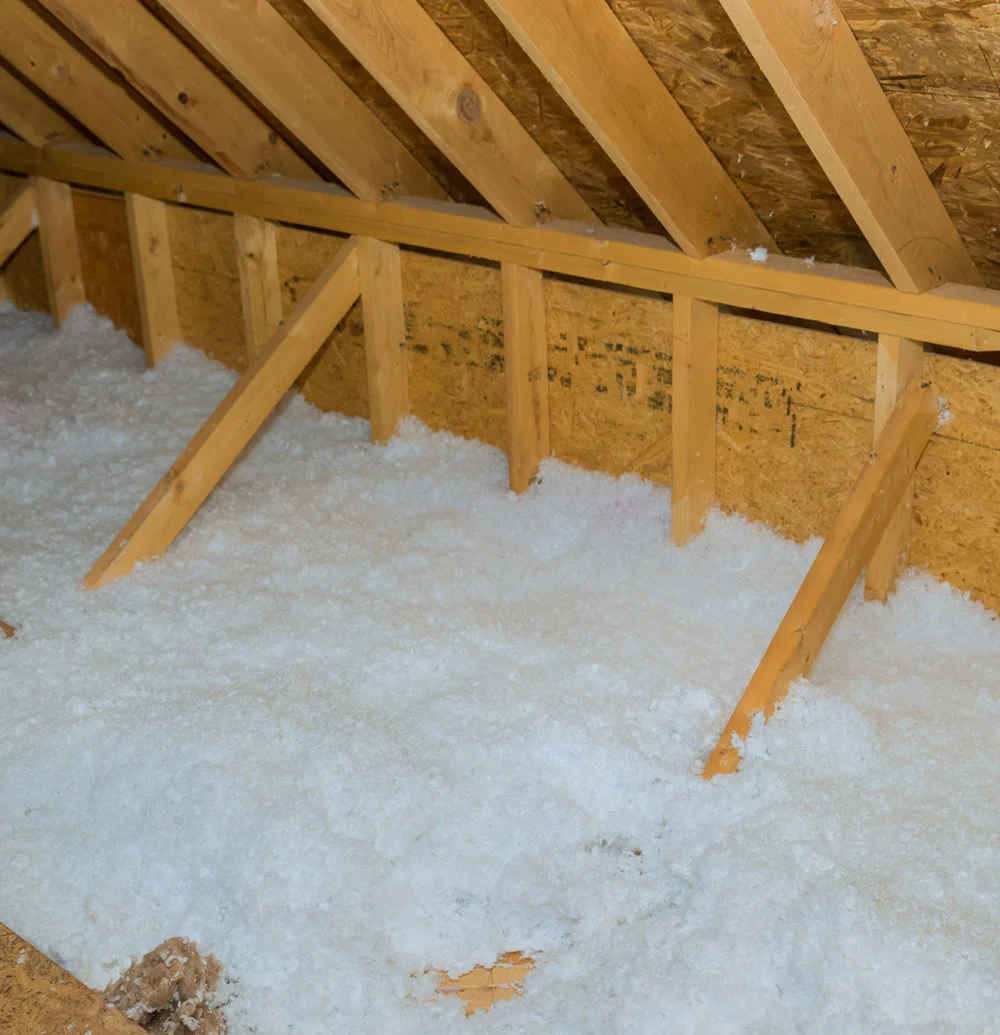
Blown-in attic insulation is loose-fill fiberglass or cellulose installed across the attic floor to slow heat transfer between the attic and the rooms below. At Green Faith Solutions, we inspect the attic first and recommend the material, depth, and coverage appropriate for the home.

Proper attic insulation can support steadier indoor temperatures and reduce thermal weak points. It may be especially helpful when a house feels hot, rooms are uneven, or the AC runs for long periods despite working properly.

attic insulation

What Is Blown-In Attic Insulation?

Blown-in insulation, also called loose-fill insulation, consists of small fibers installed with pneumatic equipment. The material is distributed across the attic floor until the required depth, density, and coverage are reached.

Because loose-fill insulation settles around joists, pipes, wiring, ducts, and other obstructions, it works well in attics with irregular layouts or difficult-to-reach areas. The U.S. Department of Energy recognizes both fiberglass and cellulose as attic insulation options.

Did you know? According to ENERGY STAR, insulation near the center of an attic may look sufficient while areas along the eaves have much less coverage. Checking several locations helps identify uneven or shallow insulation.

How Does Attic Insulation Improve Home Comfort?

Insulation slows heat movement between the attic and the living space. During hot weather, it helps reduce the amount of attic heat moving through the ceiling. During cooler weather, it helps limit indoor heat from escaping upward.

When insulation is thin, compressed, or uneven, rooms beneath weak areas may feel noticeably warmer or colder. The AC or heating system may also run longer while trying to maintain the thermostat setting.

A new AC unit still has to work against heat entering through the home’s ceiling, walls, windows, ducts, and air leaks. Improving attic insulation may reduce part of that load, although equipment condition and duct performance also affect comfort.

Fact: ENERGY STAR estimates that air sealing and insulation improvements can save the average homeowner about 15% on heating and cooling costs. Actual results vary based on the home, climate, energy rates, equipment, and household habits.

What Are The Signs of Inadequate Attic Insulation?

A high electric bill does not automatically mean the attic needs more insulation. However, the following signs may justify an attic evaluation:

  • Insulation is below the ceiling joists in several areas.
  • Bare drywall or shallow sections are visible.
  • Certain rooms stay warmer or cooler than others.
  • The AC runs for long periods.
  • Previous repair work disturbed the insulation.
  • The attic hatch feels drafty or is poorly insulated.
  • Material near the eaves is thin or displaced.

Insulation depth should be checked in multiple areas. Condition, density, and consistency are just as important as the measurement taken near the attic entrance.

Why Does Attic Insulation Become Uneven?

Some homes were built with less insulation than current performance goals recommend. In other homes, insulation may have been moved during roofing, electrical, plumbing, or HVAC work and never restored.

Walking or storing items directly on loose-fill insulation can compress it and reduce its effectiveness. Air near soffit vents can also move lightweight material when baffles are missing or damaged.

Insulation does not necessarily need replacement simply because it is old. Clean, dry material may remain usable, while wet, contaminated, compressed, or heavily disturbed insulation requires further evaluation.

How Much Blown-In Insulation Does an Attic Need?

The amount of insulation needed depends on the existing material, attic size, climate, target R-value, ventilation, and selected product.

R-value measures resistance to heat flow. A higher R-value generally provides greater thermal resistance, but only when the insulation is installed correctly. Gaps, moisture, compression, low density, and uneven coverage can reduce performance.

Fiberglass and cellulose provide different R-values per inch, so they may require different finished depths. Installers should measure several parts of the attic and follow the manufacturer’s coverage chart to determine the proper bag count and settled depth.

Is Fiberglass or Cellulose Better?

Blown-in fiberglass and cellulose can both provide effective attic coverage. The appropriate option depends on the home.

Fiberglass is lightweight and fits easily around framing and obstructions. Depending on the product, it may require greater depth than cellulose to reach the same R-value.

Cellulose is made primarily from treated recycled paper fibers. It is denser and often provides more R-value per inch, but its weight, settling requirements, and the attic’s moisture history must be considered.

Green Faith Solutions evaluates the existing insulation, available attic space, ventilation, and project goals before recommending a material.

What Should Be Checked Before Installation?

New insulation should not cover unresolved attic conditions. Before installation, the attic should be inspected for:

  • Roof or plumbing leaks
  • Damp or stained insulation
  • Pest contamination
  • Blocked ventilation
  • Unsafe electrical conditions
  • Exhaust fans releasing air into the attic

Accessible air leaks around pipes, wiring, framing, fixtures, and the attic hatch should also be evaluated. Blown-in insulation slows heat transfer, but it does not completely stop air movement.

Ductwork can also affect comfort. Leaking supply ducts may release conditioned air into the attic, while damaged returns can pull hot or dusty attic air into the system. Attic insulation cannot correct disconnected ducts or mechanical problems.

Blown-In-Attic-Insulation-Services

Affordable Monthly Payments + Utility Rebates

We’ve made the smart energy upgrade easier to say yes to. Combine low monthly financing with available utility rebates — most homeowners pay less per month in financing than they save on their electric bill.

Utility Rebates & Incentives

Major utilities — FPL in Florida and SRP/APS in Arizona — offer energy-efficiency rebates and incentive programs for qualifying homeowners. We help you identify which programs you qualify for and assist with the paperwork — at no extra charge.

Greensky

Fast home-improvement financing

Wisetack

Soft credit checks, transparent terms

Synchrony

Flexible monthly payment plans

Service Finance

Energy-efficiency specialists

Hearth

Multi-lender comparison

Approval in minutes. Soft credit checks available. Multiple programs to fit every credit profile.

What Happens During Installation?

A professional blown-in insulation project begins with an attic inspection and measurements of the existing material. We review the homeowner’s concerns and check insulation coverage, ventilation, moisture, ductwork, wiring, and attic access.

Preparation may include protecting the access area, preserving ventilation paths, repairing baffles, marking equipment clearances, and placing depth markers.

Fiberglass or cellulose is then installed in controlled passes around framing and obstructions. Special attention is given to corners, eaves, and areas beneath ductwork where thin coverage commonly occurs.

After installation, we review the material depth, distribution, ventilation paths, and required clearances. Homeowners should understand which product was installed, the intended R-value, and the approximate finished depth.

Moisture and Roof Leaks

Water problems should be corrected before adding new attic insulation. Roof leaks, plumbing leaks, condensation, or improperly vented exhaust fans can wet existing materials and damage surrounding building components. Covering wet insulation with new material can conceal the problem and make future repairs more difficult. It may also reduce the performance of the insulation and create conditions that support odors or biological growth.

Dark staining, damp materials, rusted fasteners, wet roof decking, or musty odors may indicate a moisture issue. Bathroom and kitchen exhaust fans should terminate outdoors rather than releasing moist air into the attic. Ventilation openings should also remain clear so the attic can function as designed. A professional inspection helps determine whether the attic is ready for insulation or requires corrective work first.

Pest and Contamination Concerns

Pests can tunnel through, compress, relocate, or contaminate attic insulation. Rodents and other animals may leave nesting materials, droppings, urine, or damaged wiring behind. Installing new insulation over contaminated material does not correct the underlying sanitation or pest-entry problem. Pest access points should be addressed, and contaminated insulation should be evaluated before additional material is installed.

Not every attic with minor evidence of pest activity requires complete insulation removal. The appropriate response depends on the type and extent of contamination, the condition of the insulation, and whether the source has been eliminated. A limited affected area may require a different approach than widespread contamination. The goal is to avoid trapping an unresolved problem beneath a new insulation layer.

The Importance of Air Sealing

Insulation slows conductive heat flow, but loose-fill fiberglass and cellulose are not complete air barriers. Air can move through openings around plumbing pipes, wiring, recessed fixtures, framing joints, top plates, duct penetrations, and attic access panels. These leaks may allow conditioned air to escape into the attic or unconditioned air to enter the living space. Adding insulation over major openings can hide them without fully correcting the energy loss.

Air sealing is often most effective before new insulation is installed because the attic floor remains visible and accessible. Appropriate sealants and materials are used based on the size, location, and temperature exposure of each opening. Combustion appliances, chimneys, flues, and heat-producing fixtures require special clearances and approved materials. Professional evaluation helps ensure that leakage points are addressed without creating ventilation or safety problems.

Ductwork in the Attic

Attic ductwork can significantly affect comfort and energy performance. Leaking supply ducts may release conditioned air into the attic before it reaches the intended rooms. Leaking return ducts may draw hot, dusty, or humid attic air into the HVAC system. Even sealed ducts can gain or lose heat when they pass through an unconditioned attic.

Adding insulation to the attic floor does not automatically correct damaged or leaking ductwork. Duct connections, insulation, supports, and accessible sections should be evaluated when comfort problems persist. Green Faith Solutions provides duct-sealing services that can be considered alongside attic insulation. Addressing both systems may produce better results than focusing on insulation alone when duct leakage is also present.

Can Attic Insulation Help When the AC Runs Constantly?

Inadequate attic insulation may contribute to extended AC cycles by allowing more heat to move through the ceiling. Improving weak or uneven coverage can reduce heat transfer and may help the home maintain a more consistent temperature.

However, long cooling cycles can also result from duct leakage, restricted airflow, thermostat concerns, equipment condition, system sizing, or extreme outdoor temperatures.

This is why a new AC does not always solve a hot-house problem. If insulation is shallow or missing in some areas, the new system may still be working against significant attic heat.

An attic inspection can help determine whether insulation is contributing to the problem or whether another part of the home should be evaluated.

How Much Does Blown-In Attic Insulation Cost?

The cost to get insulation blown in depends on the attic size, material, existing insulation, target R-value, access conditions, preparation, and required material quantity.

Roof pitch, obstructions, ventilation repairs, contamination, and hard-to-reach areas may also affect the scope. An estimate based only on square footage may not account for these conditions.

A professional inspection helps homeowners compare proposals based on the material quantity, preparation, target performance, and installation method rather than price alone.

What Can Homeowners Expect From Green Faith Solutions?

Green Faith Solutions is a family-owned, owner-operated company providing blown-in attic insulation for residential homes in Arizona and Florida. We measure before recommending and look beyond the insulation visible beside the attic hatch.

Our evaluation considers existing material, uneven coverage, ventilation, moisture, accessible air leakage, and other conditions that may be affecting comfort.

When insulation is appropriate, we explain the recommended material, depth, preparation, and installation process in clear terms. Our goal is to help homeowners understand what is currently in the attic and what the proposed work is designed to improve.

What Our Happy Clients Had To Say

Posted on Google Google
Tyler M profile picture
Tyler M
Google star 1Google star 2Google star 3Google star 4Google star 5Trustindex verifies that the original source of the review is Google.
They did amazing job got it done the day of quote really killed
Posted on Google Google
Pamela m profile picture
Pamela m
Google star 1Google star 2Google star 3Google star 4Google star 5Trustindex verifies that the original source of the review is Google.
Excellent service, knowledgeable, and very helpful in insulating the attic. Thank you!”
Posted on Google Google
John m profile picture
John m
Google star 1Google star 2Google star 3Google star 4Google star 5Trustindex verifies that the original source of the review is Google.
Professional and experienced crew, on time and reasonable costs. Would recommend. JM
Posted on Google Google
Carlos U profile picture
Carlos U
Google star 1Google star 2Google star 3Google star 4Google star 5Trustindex verifies that the original source of the review is Google.
Very Professional, very clean, very efficient, great team, if your looking for a great company, go with Green Faith Solutions, they will check off all your boxes, they recommend what’s best for your needs, I give a 10/10!!!
Posted on Google Google
Denny G profile picture
Denny G
Google star 1Google star 2Google star 3Google star 4Google star 5Trustindex verifies that the original source of the review is Google.
Philip was very professional and did an outstanding job.
Posted on Google Google
William M profile picture
William M
Google star 1Google star 2Google star 3Google star 4Google star 5Trustindex verifies that the original source of the review is Google.
Felt a huge difference within the first 30 minutes of them working! Highly recommend it
Posted on Google Google
Michael G profile picture
Michael G
Google star 1Google star 2Google star 3Google star 4Google star 5Trustindex verifies that the original source of the review is Google.
Excellent, fast and friendly service! Very good price! Would highly recommend! Thank you!!!
Posted on Google Google
Peter D profile picture
Peter D
Google star 1Google star 2Google star 3Google star 4Google star 5Trustindex verifies that the original source of the review is Google.
Very professional, did a great job!
Posted on Google Google
Jaiden m profile picture
Jaiden m
Google star 1Google star 2Google star 3Google star 4Google star 5Trustindex verifies that the original source of the review is Google.
Call this company! I called for a quote. They came out the next business day. Got right in the attic and gave us an awesome quote! And the best part is they did the service the same day. 10/10 recommend this company for insulation and will recommend to all my friends and family! Thank you guys so much!
Posted on Google Google
Patrick H profile picture
Patrick H
Google star 1Google star 2Google star 3Google star 4Google star 5Trustindex verifies that the original source of the review is Google.
Erik’s the man I got 2 previous bids - Erik looked at one of them and explained the differences, pros/ cons, what aspects of the bid was good/ bad/ shady, etc. I picked these guys because he spent the time to actually inform me and help me understand what they were going to do and how the products they planned to use would be different. Much appreciated, crew! Gotta love an honest contractor. Job well done. Highly recommend

Schedule an Attic Insulation Evaluation

A hot house, uneven rooms, or an AC system that runs for long periods may be connected to weak attic insulation, but the right next step is to inspect rather than assume. Contact Green Faith Solutions to schedule free inspection, understand what is currently above your ceiling, and learn whether professionally installed blown-in fiberglass or cellulose is appropriate for your home.

Frequently Asked Questions

How do I know whether my attic needs more insulation?

Possible signs include uneven temperatures, long AC cycles, visible bare areas, and insulation below the ceiling joists. An attic inspection can confirm whether insulation is contributing to the problem.

Yes, when the existing material is dry, clean, and in good condition. Wet, contaminated, or heavily compressed insulation may need corrective work first.

Both can work well. The right choice depends on the attic layout, existing insulation, available space, moisture history, and desired R-value.

Many residential projects can be completed within one day. Attic size, access, preparation, and existing conditions may affect the timeframe.

It may help if heat is entering through an underinsulated ceiling. Duct leaks, airflow problems, equipment condition, and outdoor temperatures can also cause long cooling cycles.

A new AC still works against heat entering through the attic, windows, walls, and air leaks. Uneven insulation or duct problems may continue affecting comfort.

The amount depends on the existing insulation, attic size, chosen material, and target R-value. Measurements and manufacturer specifications should guide installation.

Pricing depends on attic size, material, access, existing conditions, and preparation needs. An onsite inspection provides the most accurate estimate.

Some settling can occur, especially with cellulose. Proper installation accounts for this by following the manufacturer’s settled-depth and material requirements.

Yes, accessible leaks are usually easier to seal before new insulation covers the attic floor. Proper materials and safety clearances must be used.